


Last updated on: February 18, 2026
I’ve been sent a fair few unusual things over the years.
Protein bars that taste like damp cardboard.
Kitchen gadgets that promised to change my life and ended up gathering dust next to the bread maker.
But this one’s a first.
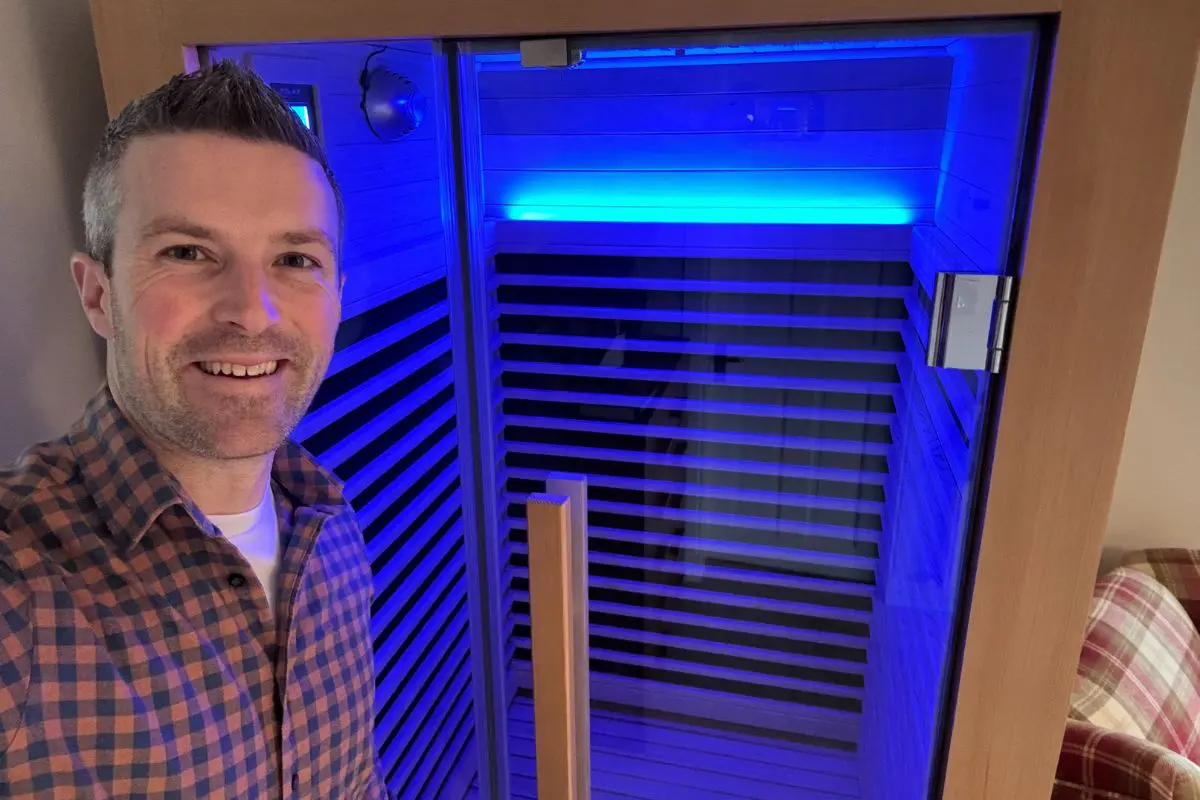
The folk at Polar Recovery got in touch and asked if I fancied reviewing their Polar Nova 1-Person Infrared Sauna for 30 days.
Yes, an actual sauna. In my house.
Before you picture a log cabin and buckets of water — this isn’t that kind of sauna. This is a home infrared sauna.
Sleek, modern, plugs into the wall, and doesn’t require planning permission.
I’d seen infrared saunas everywhere. Recovery centres. Instagram. People claiming they’d transformed their sleep, recovery, skin, stress levels — possibly their entire personality.
But do infrared saunas actually work? And more importantly — are infrared saunas safe, or am I slowly cooking myself from the inside out?
So I decided to review the Polar Recovery sauna properly. No gimmicks. No extremes. Just consistency.
Here’s what happened.
What Even Is An Infrared Sauna?
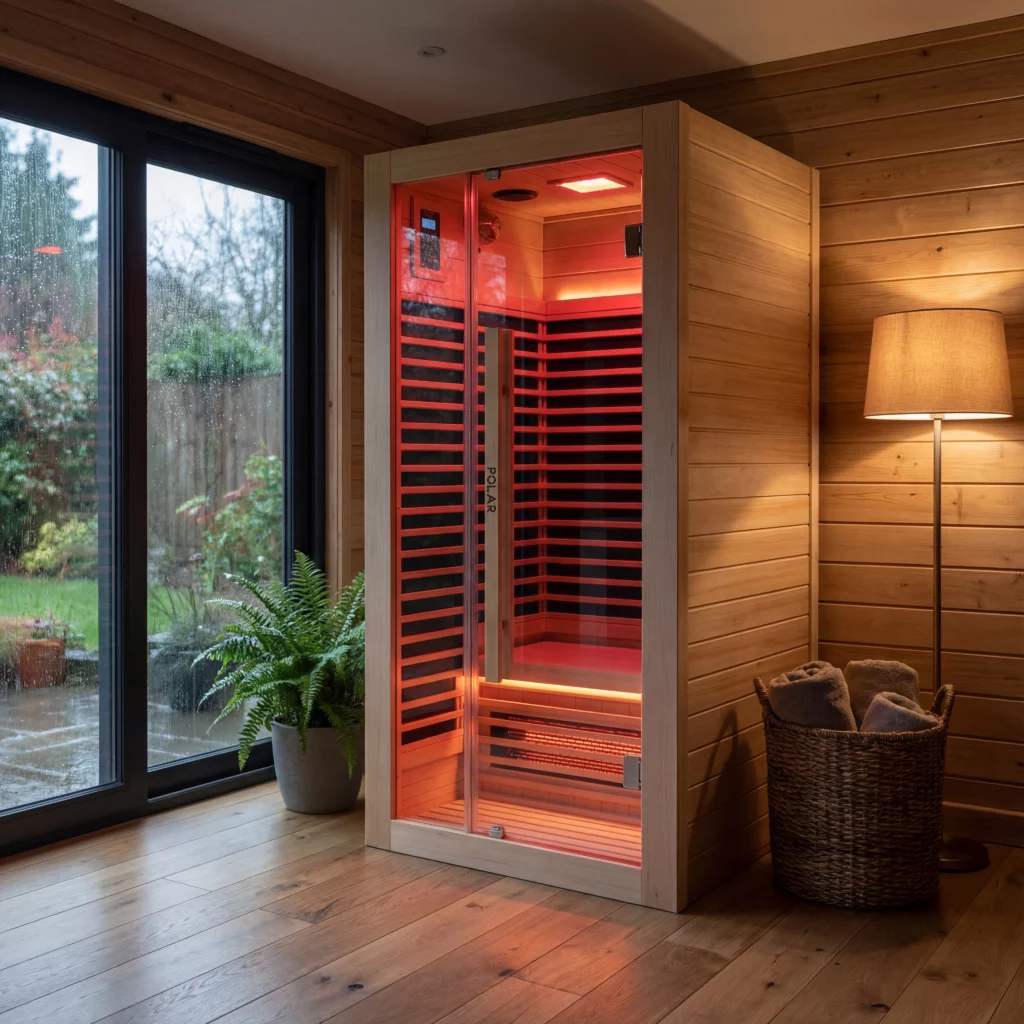
A traditional Finnish sauna is a wooden room heated by hot stones, often reaching 80–100 °C.
Hot. Relentless. Character-building.
An infrared sauna works differently. Instead of heating the air, it uses infrared light to warm your body directly. Because of that, they run cooler — usually 45–65 °C — but still make you sweat, raise your heart rate, and increase blood flow.
In short: less suffocating heat, less warm-up time, and a far more realistic option for home use.
The Science Bit (Infrared Sauna Benefits Without the Lab Coat)
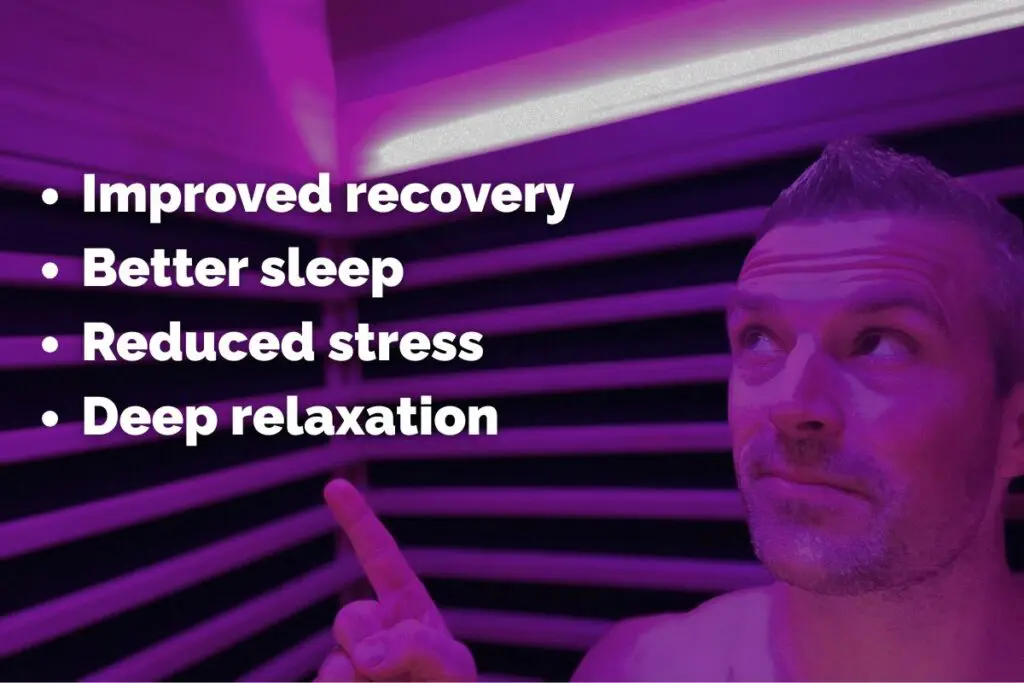
So, what does sitting in a glowing heat box actually do for you?
Most of the strongest sauna research still comes from traditional Finnish saunas — the big wooden rooms heated to frankly daft temperatures.
Those long-running studies consistently link regular sauna use with better heart health, lower blood pressure, reduced stress, and improved overall wellbeing, including a reduced risk of cardiovascular disease and stroke
Infrared saunas run cooler and heat you more directly. Until recently, the research on them was thinner — but that’s starting to change.
The logic is simple. If infrared saunas trigger the same core body responses — raised heart rate, increased blood flow, sweating, and nervous-system calming — then many of the benefits should overlap. And newer studies suggest that’s exactly what’s happening.
Heart health
Large population studies show regular sauna bathing is linked with lower blood pressure and reduced cardiovascular risk
That evidence still mainly comes from traditional Finnish saunas. However, studies using lower-temperature dry heat (around 60 °C) have also shown improvements in circulation and vascular function, suggesting extreme heat isn’t strictly necessary to see benefits
Direct infrared-specific cardiovascular studies are still limited, but newer research suggests infrared saunas can raise heart rate, blood flow, and skin temperature in ways that plausibly overlap with traditional sauna responses.
Muscle recovery
View this post on Instagram
This is where infrared research has grown the most.
A randomised trial in trained athletes found that a single infrared sauna session after exercise improved recovery of explosive performance and reduced muscle soreness compared with passive rest.
Earlier work also showed far-infrared sauna bathing supported recovery after both strength and endurance training.
Sleep, mood & stress
Heating up before bed and then cooling down helps the body fall asleep faster — this effect is well established.
A meta-analysis on warm baths and passive body heating showed improved sleep onset and sleep quality when heat exposure occurred before bedtime and whole-body heat exposure has also been shown to reduce stress and improve mood, including trials using controlled heat as a treatment for mild depression
Bottom line:
Traditional saunas still dominate the long-term research, but infrared-specific studies are rapidly filling the gaps — especially around recovery, circulation, and stress.
Infrared Sauna First Impressions
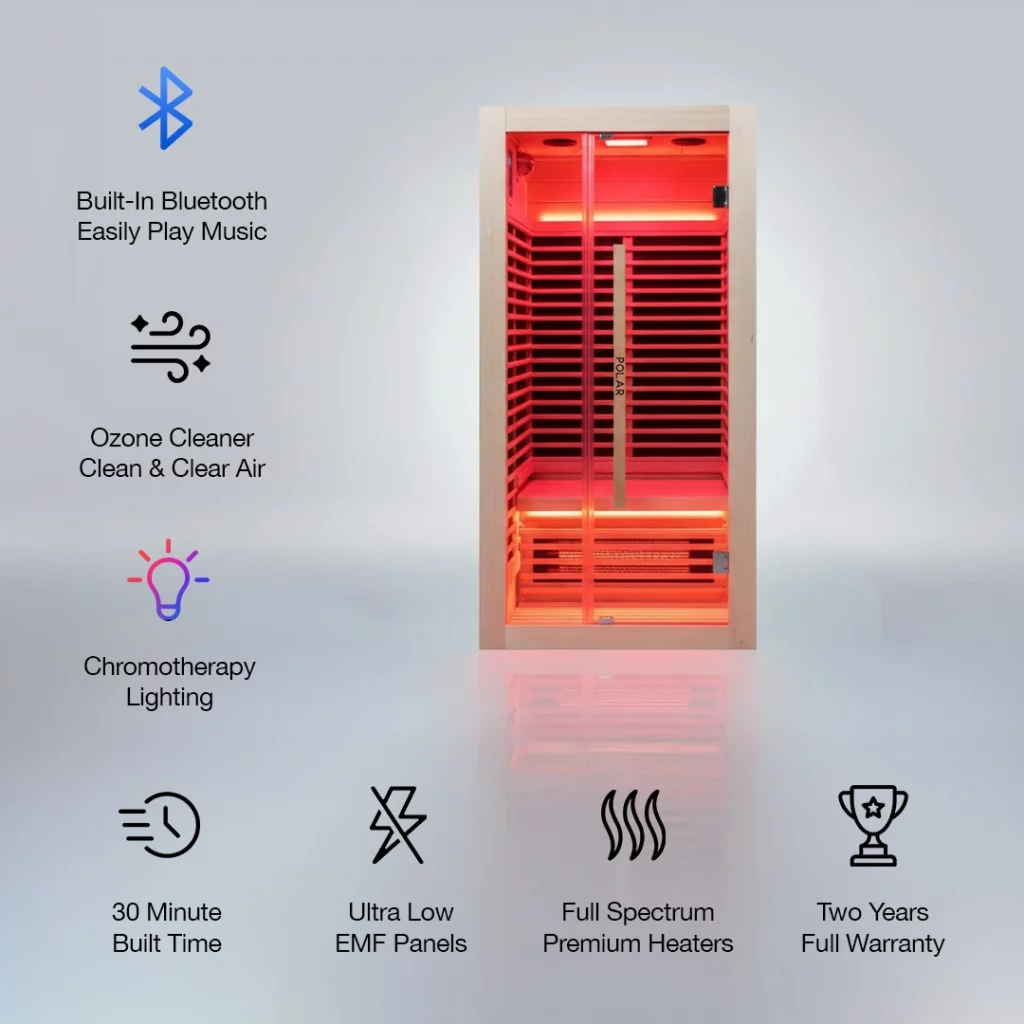
When the home infrared sauna arrived, I was genuinely impressed by how good it looked.
The wood panelling is clean, modern, and fits perfectly with the oak furniture in my bedroom — it actually looks like it belongs there.
The build quality feels solid and well finished. Nothing flimsy. Nothing cheap.
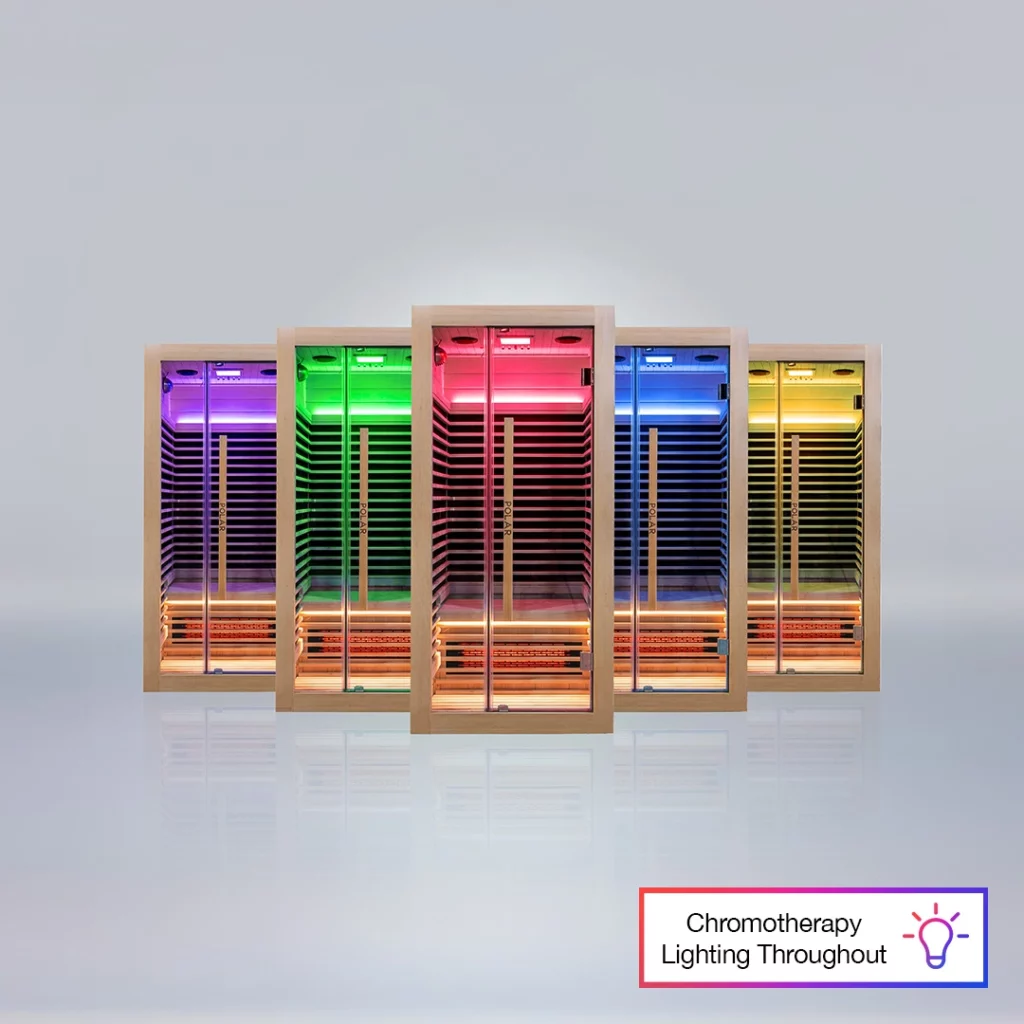
The mood lighting gives proper spa vibes rather than “home gym equipment”.
Add the built-in speakers, a bit of chilled music, and switching off for 15 minutes is effortless.
Credit where it’s due as well — the lads who delivered and set it up were great. Friendly, efficient, and had everything up and running with zero hassle.
First impressions? Very strong.
My 30-Day Sauna Experiment (And What I Actually Noticed)
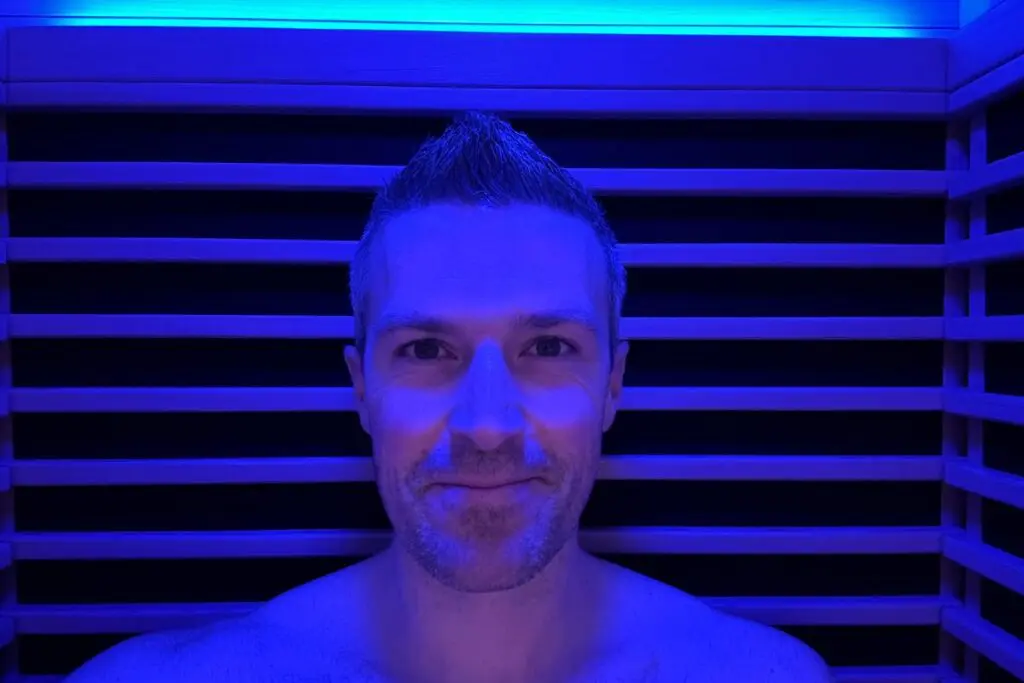
I went into this Polar Recovery sauna review with pretty modest expectations.
Most of what I’d read about infrared saunas made them sound like the “lighter” option: not as hot as a Finnish saunas, more gentle, more mild.
So I set a simple goal.
60 minutes of sauna per week, split into 15 minutes on four nights, always before bed.
Night one changed everything.
Within a few minutes, I was absolutely pis*ing with sweat (Scottish term). Not a polite glow — proper, full-body drip.
Honestly, if you’d blindfolded me and sat me down inside it, I wouldn’t have known whether I was in an infrared sauna or a Finnish one. It felt properly hot. It even had that lovely warm wood panel smell you only get in real saunas.
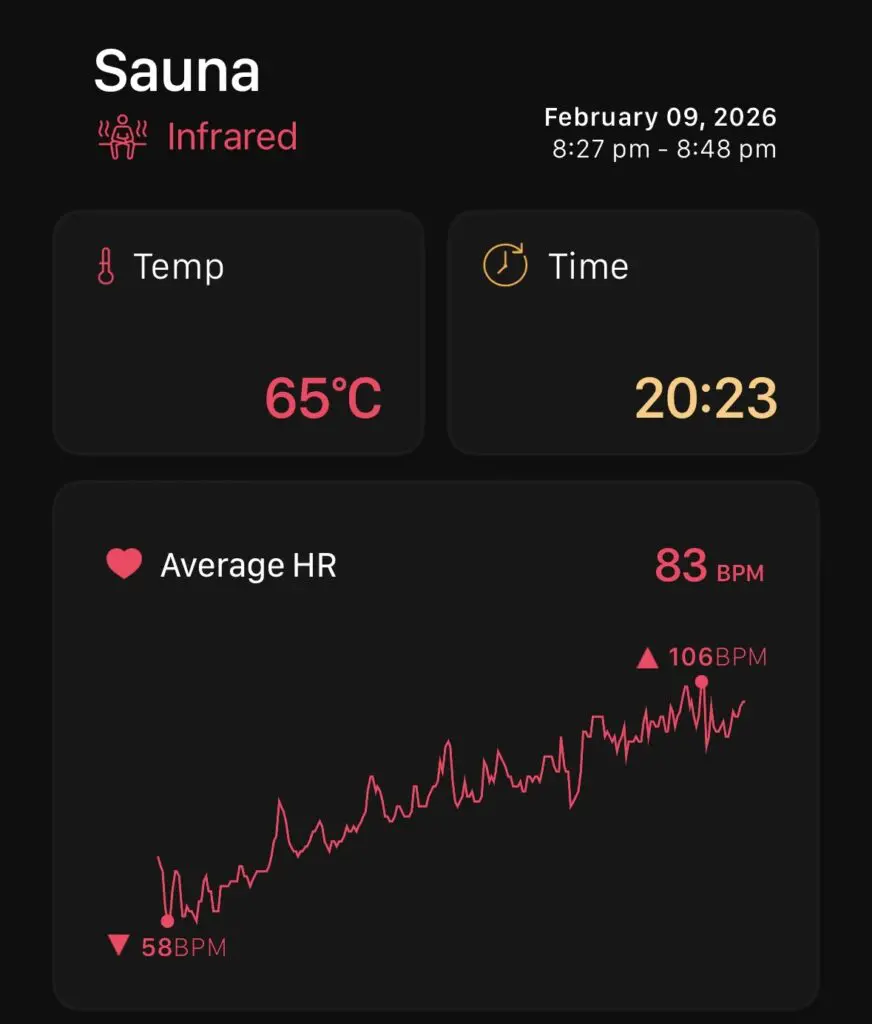
Most nights, I’d head in once the kids were in bed and the house finally went quiet. I’d set the temperature to 65 °C — it can go higher (up to 75), but 65 was more than enough for me. I’d sit down, let the heat build, and read a paperback book.
Phones and Kindles get far too hot in there, so an old-school book was perfect. No notifications. No scrolling. Just heat, quiet, and a bit of peace.
I used an app on my phone called GoPolar to track my sessions.
Here's an example of what one looked like (notice the rise in HR):
As the weeks went on, it became a proper ritual. Hot. Quiet. Deeply relaxing.
The deep heat genuinely soothed sore muscles after training. Nothing dramatic — just less stiffness hanging around and a general feeling of being looser and more comfortable the next day.
Sleep was the biggest win by far.
On sauna nights, I fell asleep noticeably quicker.
No lying there replaying the day in my head.
No restless tossing and turning.
It was always the same flow: sauna, quick shower, into bed, out like a light.
By the end of the month, I’d completely revised my opinion. Infrared isn’t a watered-down alternative to a Finnish sauna. It’s just a different way of delivering heat — and in my experience, an equally effective one.
And when something helps you relax, recover, and sleep better night after night, it doesn’t feel like an experiment anymore. It just becomes part of how you wind the day down.
The Downsides (Because Nothing’s Perfect)
There is an initial cost.
A home infrared sauna isn’t pocket change. The one I used - The Polar Recovery Nova 1-person Infrared Sauna - sets you back around £2500 (but if you use the code FFF10 you'll get a 10% discount)
But compared with building a traditional sauna or paying for regular spa visits, it’s far more affordable.
Running costs are modest too — around 20–25p per 15–20 minute session, which works out at roughly £60–£90 per year if used most nights.
For me, the benefits easily outweighed that.
Final Verdict — Would I Recommend It?
After completing my 30-day Polar Recovery Sauna Review, I have to say yes. Without hesitation!
I know "inflooenzers" are notorious for claiming every product they use is the best thing since sliced bread....
But I hardly ever recommend other products or do sponsored posts because most things I get offered are garbage.
Thefore, when I say that this sauna is the bomb, I don't do it lightly!
I’ll be sticking with my protocol — 15 minutes, four nights a week, before bed. Simple. Effective. Enjoyable.
It’s not a miracle cure. But it is a genuinely useful tool for relaxation, recovery, and sleep — and one I’ll keep using for the foreseable future.
So if you're keen to get one, the Polar folks sent me over the code FFF10 and it will knock 10% off your order.


Scott is the owner and founder of Food For Fitness. He is a fat loss coach, speaker and fitness writer with a masters (MSc) degree in Applied Sports Nutrition.