

Last updated on: March 3, 2026
If you’re wondering how to fix slow cooker recipes that have turned watery, bland or dry, you’re not alone.
Slow cookers are meant to make life easier. Chuck everything in, walk away, come back feeling like a domestic wizard.
Until you lift the lid and it looks like beige soup.
If you’ve ever Googled “how to fix slow cooker recipes” while staring at something watery, bland or weirdly dry at the same time (how is that even possible?), you’re in the right place.
I develop and test slow cooker recipes professionally. And here’s the truth: most disasters aren’t your fault. They’re usually down to how slow cookers actually work — and a few common mistakes that almost everyone makes.
Let’s fix tonight’s dinner… and stop it happening again.
Why Slow Cooker Recipes Go Wrong
Slow cookers trap moisture, don’t reduce sauces properly, and cook at a steady low temperature for hours. That’s brilliant for breaking down tougher cuts of meat — but it also means flavours can dull, liquid can build up, and lean proteins can overcook.
Most slow cooker “failures” come down to four things: too much liquid, not enough seasoning, the wrong cut of meat, or cooking it for longer than necessary.
The good news? All of them are fixable.
How to Fix a Watery Slow Cooker Recipe
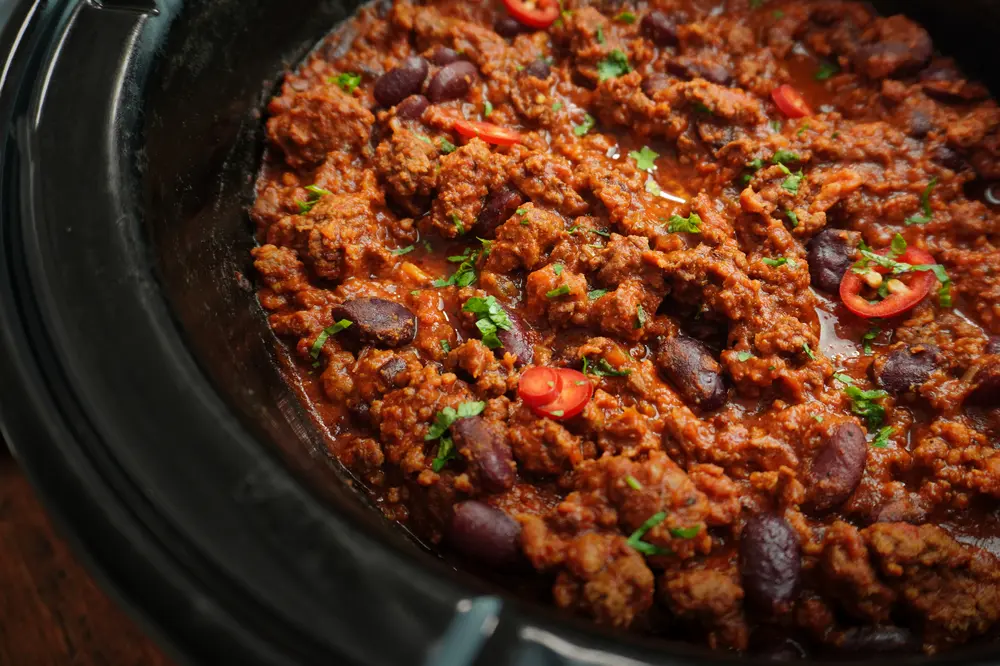
If your dinner looks more like soup than sauce, don’t panic. This is the most common slow cooker issue — and it’s usually easy to fix.
Quick Fix (Tonight)
1. Remove the lid and turn to high.
Let it cook uncovered for 20–30 minutes to allow excess liquid to evaporate.
This works particularly well in tomato-based dishes like my Slow Cooker Bolognese or something saucy like Slow Cooker Spanish Chicken, where the base already has body.
2. Use a cornflour slurry.
Mix 1 tablespoon cornflour with 1–2 tablespoons cold water. Stir in on high and cook uncovered for 10–15 minutes until thickened.
3. Mash some of the contents.
This works brilliantly in bean-heavy dishes like Slow Cooker Chilli Con Carne. Mash a ladleful and stir it back in — the starch thickens naturally.
For Next Time
-
Use 25–30% less stock than you would on the hob.
-
Remember vegetables release water as they cook.
-
Thicken at the end, not the beginning.
Watery doesn’t mean ruined. It just means unfinished.
How to Fix a Bland Slow Cooker Dish
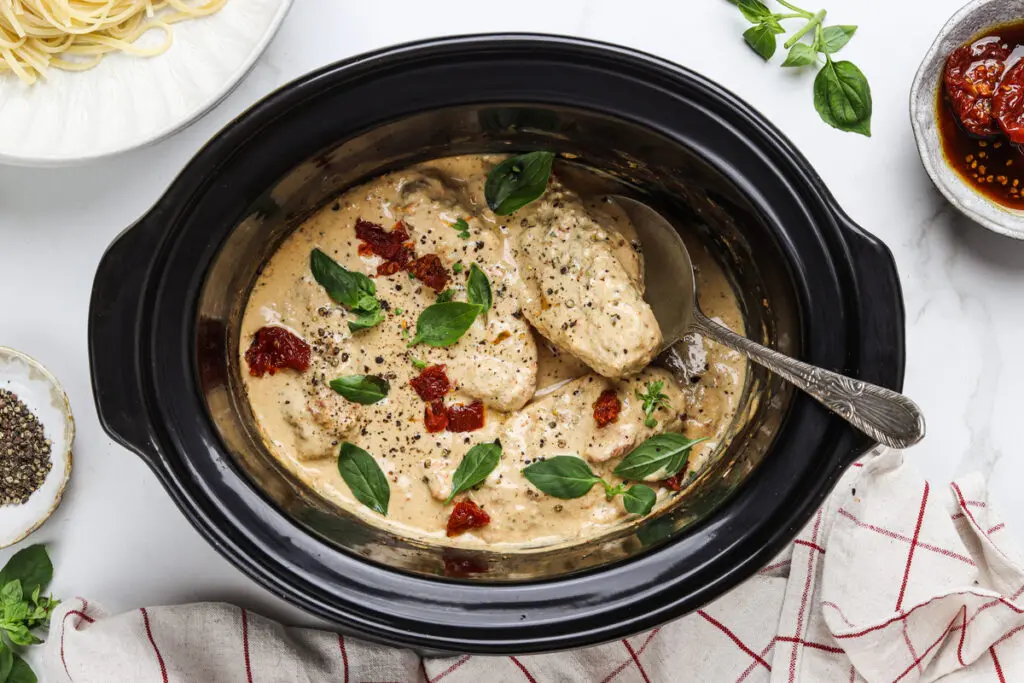
Slow cooking softens flavour. What tasted well-seasoned at the start can taste flat hours later.
The good news? Bland is one of the easiest problems to fix.
Quick Fix (Tonight)
1. Add salt.
Most slow cooker meals are simply under-seasoned.
2. Add acidity.
A squeeze of lemon juice, a splash of vinegar or Worcestershire sauce can instantly wake up a dull dish.
3. Boost the umami.
Soy sauce, tomato purée or a small spoon of Marmite can deepen savoury flavour.
This is why properly built recipes like Slow Cooker Beef Stifado and Slow Cooker Chicken Chasseur start with sautéed aromatics and layered seasoning — they don’t rely on time alone for flavour.
For Next Time
-
Always sauté onions and garlic first. Frying them for 5–8 minutes builds sweetness and depth that slow cooking alone cannot create.
-
Garlic needs 30–60 seconds in oil to remove that harsh raw edge.
-
Browning meat is optional — but recommended.
-
Season lightly at the start, properly at the end.
Slow cookers soften flavour. They don’t magically create complexity.
How to Fix Dry Chicken in a Slow Cooker
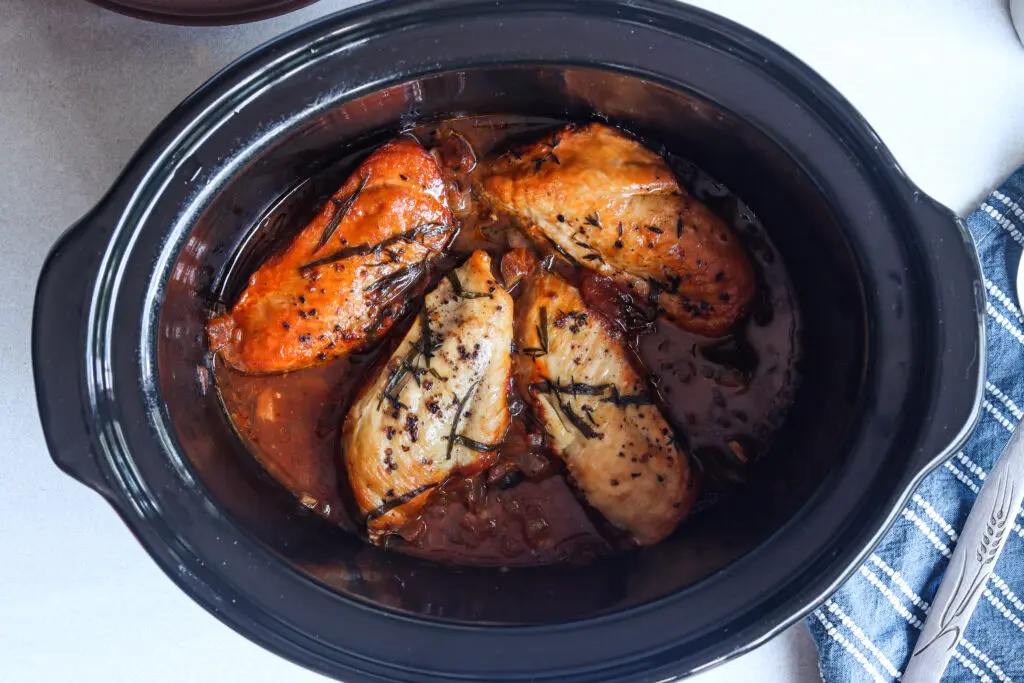
Dry chicken is usually a cut problem, not a cooking problem.
Lean chicken breast doesn’t love long cooking. It can turn stringy — especially on high.
Quick Fix (Tonight)
1. Shred it and coat it in sauce.
Shredding helps it reabsorb moisture.
2. Add creaminess.
Stir in a spoon of Greek yoghurt, crème fraîche or a little cream.
This works particularly well in creamy dishes like Slow Cooker Chicken Korma or Slow Cooker Marry Me Chicken, where moisture is part of the design.
3. Add a splash of hot stock.
For Next Time
-
Use chicken thighs for long cooking.
-
If using breast, reduce the cooking time or add it later (as I do in certain higher-protein slow cooker dishes).
-
Don’t assume longer = better.
Can You Save an Overcooked Slow Cooker Meal?
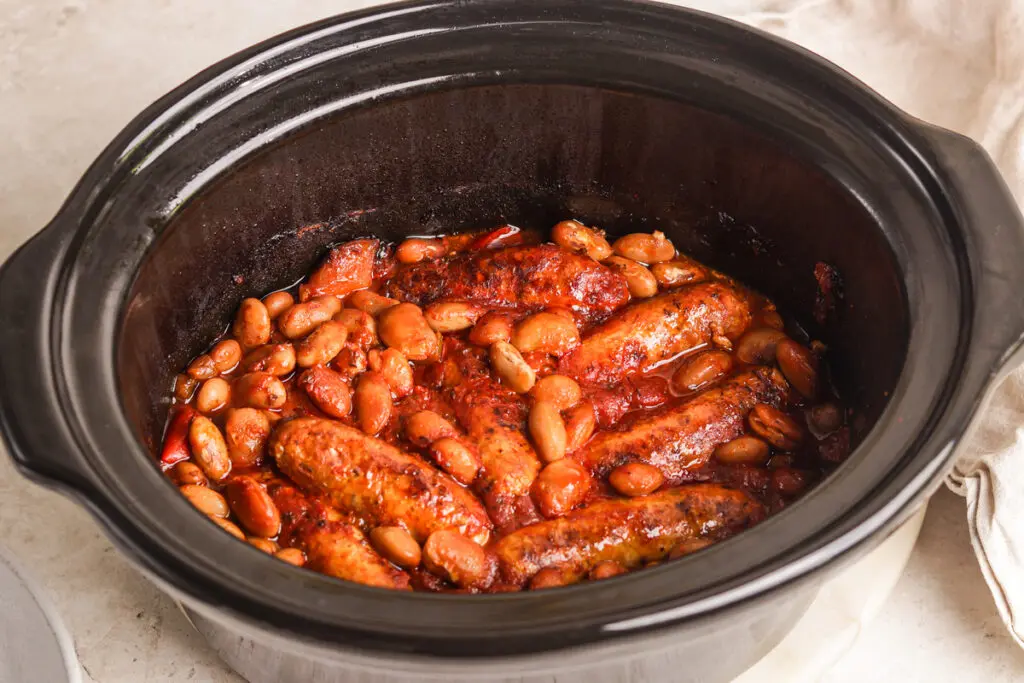
Sometimes you rescue it. Sometimes you pivot.
Quick Fix (Tonight)
-
Shred it and add moisture.
-
Add fat (olive oil, butter, yoghurt).
-
Serve it mixed into rice or wraps instead of large chunks.
If It’s Too Far Gone
Don’t bin it.
Turn it into something new:
-
Dry beef from something like Slow Cooker Beef Casserole can be shredded and used in tacos.
-
Chicken can be mixed into pasta with extra sauce.
-
Add stock and vegetables and turn it into soup.
Texture matters less when something is chopped and sauced.
How to Prevent Slow Cooker Disasters in the First Place
Most slow cooker problems are small technical misunderstandings.
Here’s the simple checklist:
Build flavour at the start
-
Sauté onions and garlic.
-
Brown meat if possible.
-
Adjust seasoning at the end.
Control the liquid
-
Use less stock than you think.
-
Expect vegetables to release moisture.
-
Thicken at the end.
Choose the right protein
-
Thighs, brisket and shoulder cuts love slow cooking.
-
Lean cuts need shorter cooking times.
Slow cookers are one of the easiest ways to cook high-protein, family-friendly meals with minimal effort — when you understand how they work.
Or, you can just use properly tested slow cooker recipes and skip the trial and error altogether.


Scott is the owner and founder of Food For Fitness. He is a fat loss coach, speaker and fitness writer with a masters (MSc) degree in Applied Sports Nutrition.